Investment
Confirmed at visit
Starting range before final treatment fit review.
Treatment Guide
Compare clinician-selected chemical peel and topical skin-renewal options by named treatment, area, visit price and personal suitability.
Booking path
Guided booking
Booking opens in Mangomint. Select your preferred treatment to continue.
Investment
Confirmed at visit
Your team will confirm pricing, plan, and suitability during booking or consultation.
Trust
Patient rating: 4.9 from 127 reviews across platforms
Live Google trust data is shown only after the aggregate source returns status ok.
Care model
Consultation-led
Your provider will recommend what is appropriate for your goals.
What happens after you book
Booking opens in Mangomint. Select your preferred treatment to continue.
Best For
A quick self-check before you book: your provider confirms full candidacy at consultation.
Treatment Snapshot
This snapshot turns the service page into a decision surface: price, time, sessions, fit, recovery, financing, and booking route stay visible before the long-form education begins.
Investment
Confirmed at visit
Starting range before final treatment fit review.
Visit time
Confirmed at visit
Typical appointment timing from the service catalog.
Plan shape
Plan dependent
Single visit or series depends on your goal and response.
Treatment area
Treatment-area dependent
Your provider confirms the precise area before treatment.
Best fit
Goal dependent
Good candidacy is confirmed through consultation.
Downtime
Reviewed during consultation
Recovery expectations vary by protocol and skin history.
Financing
Ask the clinic
Payment options are reviewed before final commitment.
Booking path
Guided booking
Booking opens in Mangomint. Select your preferred treatment to continue.
Quick Answer
Chemical peels at Rani Beauty Clinic in Renton are selected by skin concern, skin tone, downtime tolerance, and pigment risk. Your provider may recommend VI Peel, BioRePeel, PRX-T33, or a customized medical-grade peel plan for acne, melasma, sun damage, texture, dullness, or post-acne marks.
Peel Options
VI Peel + BioRePeel
Different formulas target acne, pigment, glow, texture, and collagen support.
Downtime
0-7 days
Recovery depends on peel depth; some treatments flake lightly, others visibly peel.
Best For
Pigment + texture
Helpful for melasma, sun spots, acne marks, dullness, and uneven skin texture.
Starting Price
From $325
Final pricing depends on peel type, treatment area, and whether a series is planned.
Treatment Decision
Review price, results, and comparison pages before your consultation so the treatment plan matches your goals, timeline, and budget.
About This Treatment
Prepare your consultation
Use these questions to clarify the clinician, proposed service, personal suitability and complete quote. The consultation may lead to a different approach or a decision to defer.
The Process
Your clinician conducts a thorough skin evaluation, assessing your skin type (Fitzpatrick scale), concerns, sensitivity, and any contraindications. Your treatment history, current skincare regimen, and medications are reviewed. Based on this assessment, the optimal peel type, concentration, and depth are selected for your specific needs and goals.
Depending on the peel depth, you may be prescribed a pre-peel skincare regimen 2-4 weeks before your appointment. This typically includes a retinoid and/or hydroquinone to prime the skin, accelerate cell turnover, and reduce the risk of post-inflammatory hyperpigmentation. Your clinician will provide specific preparation instructions based on your peel type.
On the day of treatment, the skin is cleansed and degreased. The peel solution is applied evenly to the treatment area in one or more layers, depending on the desired depth of penetration. You will feel tingling, warmth, and possibly a mild stinging sensation - this is normal and indicates the acid is actively working. Your clinician monitors your skin's response in real-time, adjusting the application time and number of layers to ensure safe, controlled exfoliation.
Depending on the peel type, the solution is either neutralized with a specific neutralizing agent or allowed to self-neutralize. A calming, hydrating serum or mask is applied, followed by broad-spectrum sunscreen. Your clinician provides detailed post-peel care instructions specific to your peel depth, including products to use and avoid during the healing period.
Your Experience
For superficial peels, minimal preparation is needed - simply avoid retinoids and exfoliating products for 3-5 days before treatment. For medium and deep peels, a pre-peel preparation protocol of 2-4 weeks may be prescribed, typically including a retinoid, hydroquinone, and/or vitamin C serum to condition the skin and optimize results. Avoid waxing, electrolysis, or laser hair removal in the treatment area for 1 week prior. Discontinue photosensitizing medications if possible (as directed by your clinician). Arrive with clean, product-free skin.
The peel application itself typically takes 15-30 minutes. You will feel tingling and warmth as the solution is applied, which may intensify to a stinging or burning sensation depending on the peel depth. Superficial peels feel like mild tingling. Medium peels produce more noticeable stinging that may last several minutes. Your clinician will communicate with you throughout, monitoring both your comfort and your skin's visual response. A handheld fan may be used to help manage any sensation of heat. The neutralization and soothing mask application adds 10-15 minutes to the session.
Post-peel care and downtime vary significantly by peel depth. Superficial peels may produce mild redness and slight flaking for 1-3 days - many clients have no visible peeling at all. Medium peels typically cause moderate redness, swelling, and visible peeling for 5-7 days. During the peeling phase, it is critical to keep the skin moisturized, apply SPF 30+ diligently, and avoid picking or pulling at peeling skin. Avoid retinoids, exfoliating acids, and active ingredients until your clinician advises it is safe to resume. The new skin that emerges is fresh, smooth, and more vulnerable to sun damage, so sun protection is essential for several weeks following treatment.
Results depend on the peel depth. Superficial peels produce a subtle brightening and smoothing effect that accumulates with regular monthly treatments. Medium peels can produce more noticeable improvement in texture, tone, fine lines, and hyperpigmentation after a single treatment, with best visible results once peeling is complete. A series of peels provides cumulative improvement. Many clients see measurable improvement in skin clarity, pigmentation, pore appearance, and fine lines. Results from a single medium-depth peel can last several months with proper skincare maintenance. Annual or biannual peel series may be recommended for sustained improvement.
What you can verify
A medical-aesthetic decision deserves specifics. Everything below is verifiable before you ever step into the clinic.
Reviews
Patient rating: 4.9 from 127 reviews across platforms
Patient rating: 4.9 from 127 reviews across platforms
Medical oversight
Licensed Physician
Supervised by Dr. Alexander Landfield.
Results proof
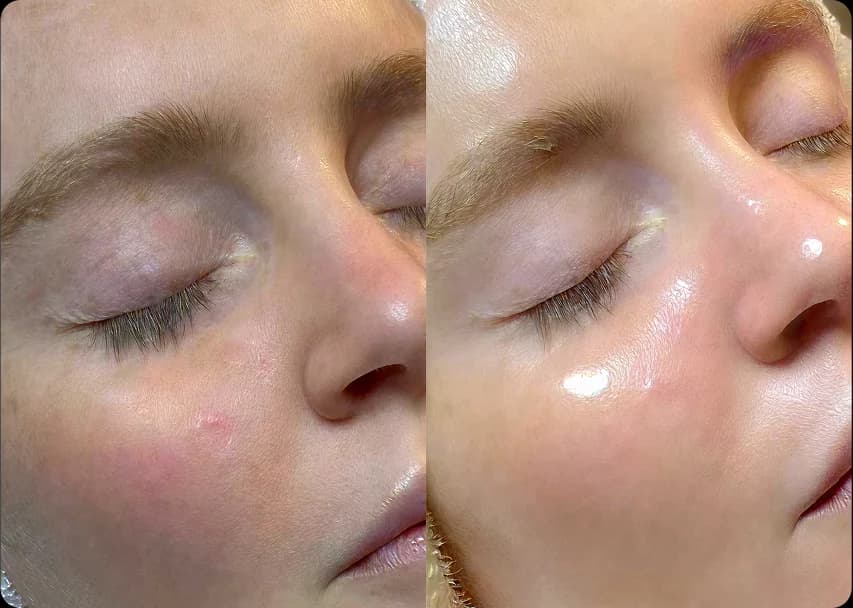
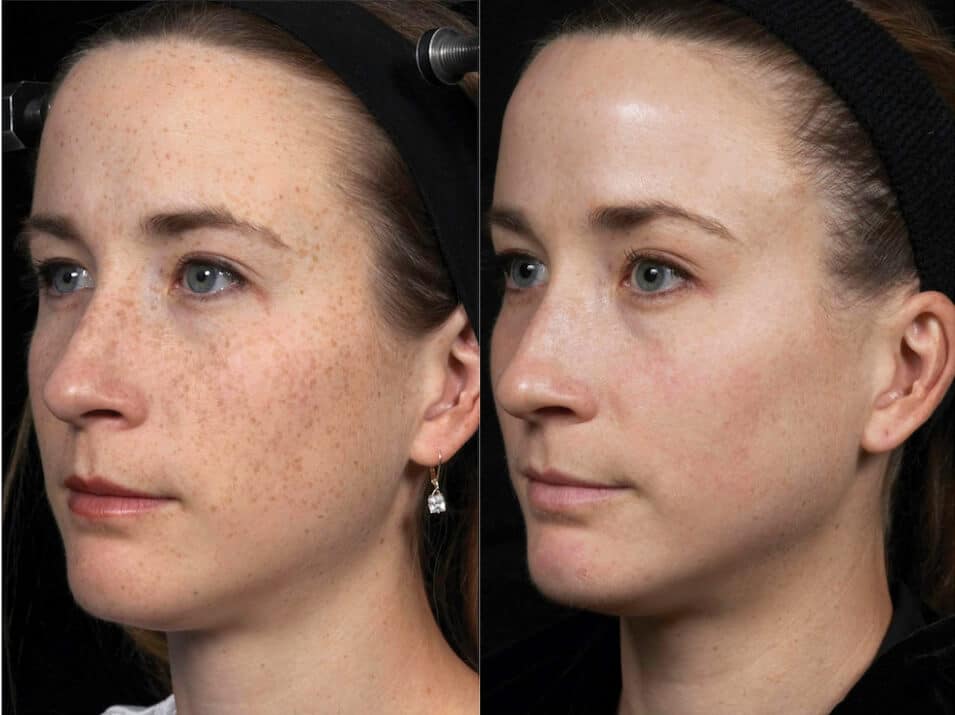
2 released gallery photos
Photos appear only when release and review status allow publication.
Privacy
Protected intake
Treatment details and personal information are not shown publicly.
Before booking
Confirm your visit
Ask who will see you, what the appointment includes and whether treatment needs a separate reservation.
Expectation control
Results vary
Claims stay conservative until your provider reviews fit and timing.
Before You Decide
Short, direct answers to the practical questions most patients ask first.
Your provider reviews medications, skin history, contraindications, and treatment timing before care begins.
Current page estimate: confirmed at visit. Final pricing is confirmed after fit, area, and plan review.
Typical plan shape: Plan dependent. Some goals need a series and some are single-visit.
Typical appointment timing: Confirmed at visit. Your exact window is shown in booking.
Recovery expectation: Reviewed during consultation. Your provider confirms prep and aftercare.
Goal dependent
Information for your decision
This page provides general educational information. Your clinician assesses suitability, possible harms, alternatives and care instructions for the proposed service. Ask how medical direction and follow-up apply to your visit, and confirm who would perform any procedure.
For a medical emergency, call 911. An elective booking does not provide emergency care.
The Rani Advantage
At Rani Beauty Clinic, our chemical peels are medical-grade formulations selected for clinical utility and safety - not the over-the-counter or spa-grade products you might find at other facilities. Every peel is performed using documented protocols designed to support results while minimizing risk. Our clinicians are extensively trained in peel chemistry, skin typing, and complication management. We customize every peel to your unique skin - adjusting the acid type, concentration, application time, and number of layers to achieve the appropriate depth of exfoliation for your goals.
Clinical Facials & Skin Renewal
Topical Skin Renewal
A professionally applied topical treatment to improve the appearance of skin firmness and hydration. Clinical cleansing is included in your visit.
Read the PRX-T33 Skin Treatment guide$495per visit
Full-face PRX-T33 topical skin treatment for the appearance of skin firmness and hydration. Clinical cleansing is included.
Choose an available time for this appointment. Your clinician confirms suitability.
Book TreatmentClinical Facials & Skin Renewal
Professional Chemical Peel
Chemical skin resurfacing for appropriate tone, texture or breakout concerns. Your clinician selects the formula; you choose the treatment area.
Read the VI Peel guide$325per visit
VI Peel for the face. Your clinician selects the formula and confirms the treatment area and care plan.
Choose an available time for this appointment. Your clinician confirms suitability.
Book Treatment$325per defined area / visit
VI Peel for one defined body area. Your clinician selects the formula and confirms the treatment area and care plan.
Copy your selection (VI Peel Chemical Peel — Defined Body Area) and discuss it at the $150 aesthetic consultation, which includes AURA 3D analysis. This books the consultation, not the selected treatment; treatment is priced separately. This books an assessment and does not reserve treatment.
Book ConsultationVI Peel: Body Area — $325 per defined area / visit
Clinical Facials & Skin Renewal
Professional Chemical Peel
Chemical exfoliation for the appearance of uneven skin texture and tone. Your clinician confirms the treatment area and appropriate protocol.
Read the BioRePeel guide$350per visit
Professional BioRePeel chemical peel for face. Your clinician confirms the treatment area and individualized care plan.
Choose an available time for this appointment. Your clinician confirms suitability.
Book Treatment$450per visit
Professional BioRePeel chemical peel for face & neck. Your clinician confirms the treatment area and individualized care plan.
Choose an available time for this appointment. Your clinician confirms suitability.
Book Treatment$575per visit
Professional BioRePeel chemical peel for back. Your clinician confirms the treatment area and individualized care plan.
Choose an available time for this appointment. Your clinician confirms suitability.
Book Treatment$275per visit
Professional BioRePeel chemical peel for underarms. Your clinician confirms the treatment area and individualized care plan.
Choose an available time for this appointment. Your clinician confirms suitability.
Book Treatment$225per visit
Professional BioRePeel chemical peel for hands. Your clinician confirms the treatment area and individualized care plan.
Choose an available time for this appointment. Your clinician confirms suitability.
Book Treatment$425per defined area / visit
Professional BioRePeel chemical peel for intimate area. Your clinician confirms the treatment area and individualized care plan.
Choose an available time for this appointment. Your clinician confirms suitability.
Book TreatmentResults Gallery
Common Questions
The difference lies in the depth of skin penetration and the resulting intensity of exfoliation. Light (superficial) peels use mild acids like glycolic or lactic acid to exfoliate only the epidermis (outermost skin layer), with minimal downtime and subtle results that accumulate over multiple sessions. Medium peels use stronger acids like TCA (trichloroacetic acid) to penetrate into the upper dermis, producing more significant improvement in texture, pigmentation, and fine lines, with 5-7 days of visible peeling. Deep peels penetrate further into the dermis for more intensive correction of wrinkles, scars, and sun damage, but require the longest recovery. Your clinician will recommend the appropriate depth based on your skin concerns, type, and tolerance.
Light peels can be performed every 2-4 weeks as a maintenance treatment and are often incorporated into a monthly skincare routine. Medium peels are typically spaced 4-8 weeks apart if performing a series, or done 2-4 times per year for maintenance. Deep peels are performed infrequently - typically once or at most a few times over a lifetime - due to their intensity and recovery time. Your clinician will design a peel schedule that aligns with your skin goals, treatment plan, and lifestyle.
Chemical peels can be safely performed on darker skin tones, but the type and depth of peel must be carefully selected to minimize the risk of post-inflammatory hyperpigmentation (PIH). Certain acids - such as mandelic acid and lactic acid - are generally well-tolerated by darker skin types. A pre-peel preparation regimen may be recommended to reduce PIH risk. Medium and deep peels require particular caution in darker skin and should only be performed by experienced clinicians. Our team is trained in skin-type-specific peel protocols and will assess your individual risk profile during your consultation.
The sensation varies by peel depth. Superficial peels feel like mild tingling - most clients find them quite comfortable. Medium peels produce a stronger stinging or burning sensation that lasts several minutes, typically described as a 3-5 on a 1-10 scale. This sensation is temporary and subsides once the peel is neutralized. Deep peels are the most intense and may require sedation or local anesthesia. For all peel types, your clinician will communicate with you throughout the procedure and can use a fan or adjust the protocol to manage your comfort.
After any chemical peel, the most important rule is sun protection - apply broad-spectrum SPF 30+ sunscreen daily and avoid direct sun exposure. Do not pick, pull, or peel flaking skin, as this can cause scarring and hyperpigmentation. Avoid retinoids, AHAs, BHAs, vitamin C serums, and other active ingredients until your clinician clears you to resume (typically 3-7 days for superficial peels, 7-14 days for medium peels). Do not schedule waxing, laser treatments, or other exfoliating procedures until your skin has fully healed. Use gentle, fragrance-free cleansers and moisturizers during the healing period.
VI Peel face care is $325 per visit, with the formula selected by the clinician. A defined VI Peel body-area visit is separately $325. PRX-T33 full face is $495 per visit and includes clinical cleansing. BioRePeel face is $350 and face with neck is $450 per visit; other named-area prices appear in the complete menu. Existing three-visit series are VI Peel face $899, BioRePeel face $949 and PRX-T33 full face $1,395. Series credits do not prescribe a course or interval. Confirm suitability, the exact area, assessment charges and the complete quote before booking.
Read It First
Clinical education to help you compare options, prepare for consultation, and set expectations before booking your treatment.
Not all dark spots are the same. Understanding the type of hyperpigmentation you have determines the most effective treatment.
Chemical peel pricing depends on peel type, treatment area, pigment risk, and whether you need one visit or a series.
Learn about the different types of hyperpigmentation, what causes them, and the treatment combinations providers commonly use for uneven skin tone.
You May Also Like
Plan Your Treatment
Compare options, prepare for your visit, and find treatment pages for nearby Eastside and South King County communities.
Compare treatment areas, understand the quote, and prepare questions for your visit to our Renton clinic.
Understand the product, area, and recovery before choosing a quote.
Understand area, product, and course pricing.
Plan an assessment at the Renton clinic.
Plan an assessment at the Renton clinic.
Plan an assessment at the Renton clinic.
Plan an assessment at the Renton clinic.
Understand assessment, preparation and recovery decisions.
Plan an assessment at the Renton clinic.
Plan an assessment at the Renton clinic.
Prepare an assessed visit at the Renton clinic.
Prepare an assessed visit at the Renton clinic.
Review the specific decision before booking an assessment at the Renton clinic.
Review the specific decision before booking an assessment at the Renton clinic.
Choose the peel around your main concern.
Plan around pigment history and sensitivity.
Compare a peel appointment with other skin-care options.
Discuss a pigment or texture concern before selecting peel depth.
Call (425) 539-4440 or book online to discuss your visit. Mangomint shows any card-on-file or prepayment requirement before you confirm.
Treatment planning
Many Rani Beauty Clinic patients compare skin tightening, texture repair, laser hair removal, and facial balancing before booking. These focused pages help you compare timing, candidacy, preparation, and expected outcomes before your consultation.
LEARN MORE
Shake off winter dullness and welcome spring with skin renewal treatments designed to restore radiance, clarity, and a fresh-faced glow.
Understand how growth factors communicate with skin cells to direct collagen production, repair, and renewal for anti-aging benefits.
Chemical peels are one of the oldest and most effective skin treatments in aesthetic medicine. Here is how they work and which type is right for your skin.